
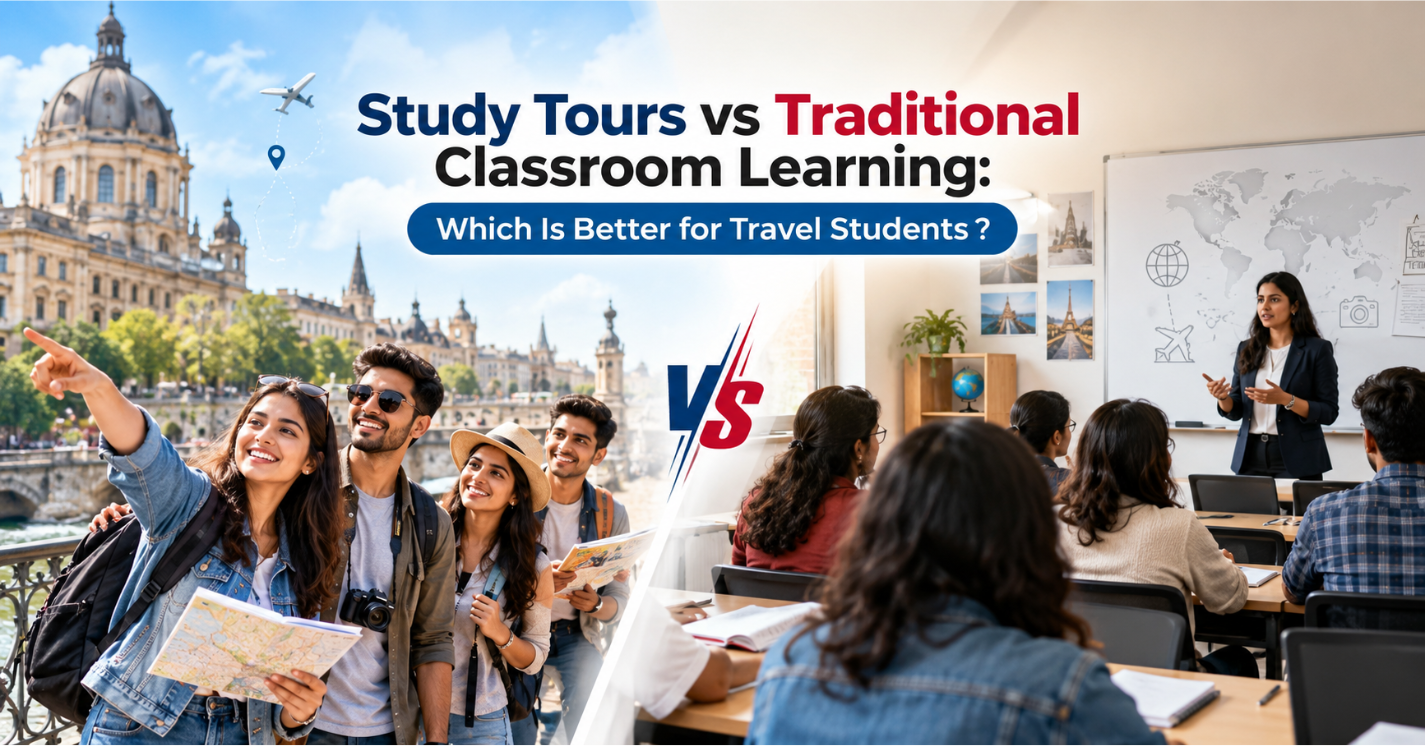
In the fast-evolving world of travel, tourism, and hospitality, learning cannot be restricted to textbooks alone. At Ties Institute, we often receive a common question from students: Is traditional classroom learning enough, or do study tours provide better exposure for travel students?
The truth is, travel education works best when theory and experience go hand in hand. Let’s explore how both learning methods contribute to shaping successful travel professionals.
Traditional Classroom Learning: Building the Foundation
Traditional classroom learning focuses on structured education through lectures, textbooks, presentations, and assessments.
For travel students, classrooms help in building a strong theoretical base. Concepts such as tourism geography, travel management, airline operations, customer service, and industry regulations are clearly explained and systematically taught. Experienced faculty members guide students using case studies, discussions, and real-world examples.
However, classroom learning has its limitations. Without practical exposure, many travel concepts remain theoretical. Students may understand destinations on paper but lack confidence in applying that knowledge in real travel scenarios.
Study Tours: Learning Through Experience
Study tours are educational trips that provide students with hands-on exposure to destinations, heritage sites, tourism infrastructure, hotels, airports, and travel operations.
At Ties Institute, study tours and heritage walks are an integral part of learning. They allow students to witness tourism in action rather than just reading about it.
Through study tours, students gain real-world understanding of destination management, itinerary planning, guiding techniques, and tourist behavior. They also develop cultural awareness, communication skills, teamwork, and professional confidence—qualities essential for a successful career in travel and tourism.
While study tours offer rich practical learning, they work best when supported by theoretical knowledge. Without classroom guidance, students may miss deeper insights behind what they observe.
Which Learning Method Is Better for Travel Students ?
For travel students, study tours provide unmatched experiential learning, while classroom education offers essential conceptual clarity. Choosing one over the other can limit a student’s growth.
The travel industry demands professionals who not only understand destinations but can also manage operations, interact with customers, and adapt to real-world challenges. This is why a combination of classroom learning and study tours is the most effective approach.
Ties Institute’s Balanced Learning Approach
At Ties Institute, we believe that the best education happens when learning goes beyond four walls. Our curriculum blends classroom teaching with practical exposure through study tours, heritage walks, and industry visits.
This approach helps students connect theory with practice, gain industry-ready skills, and develop confidence before stepping into the professional world.
Final Thoughts
So, which is better study tours or traditional classroom learning?
For travel students, the answer lies in balance. Classrooms teach the fundamentals, while study tours transform that knowledge into real experience.
At Ties Institute, we ensure our students don’t just study travel—they experience it, understand it, and prepare for it in the most practical way possible.
Because the best travel professionals are those who learn by both studying and exploring.