
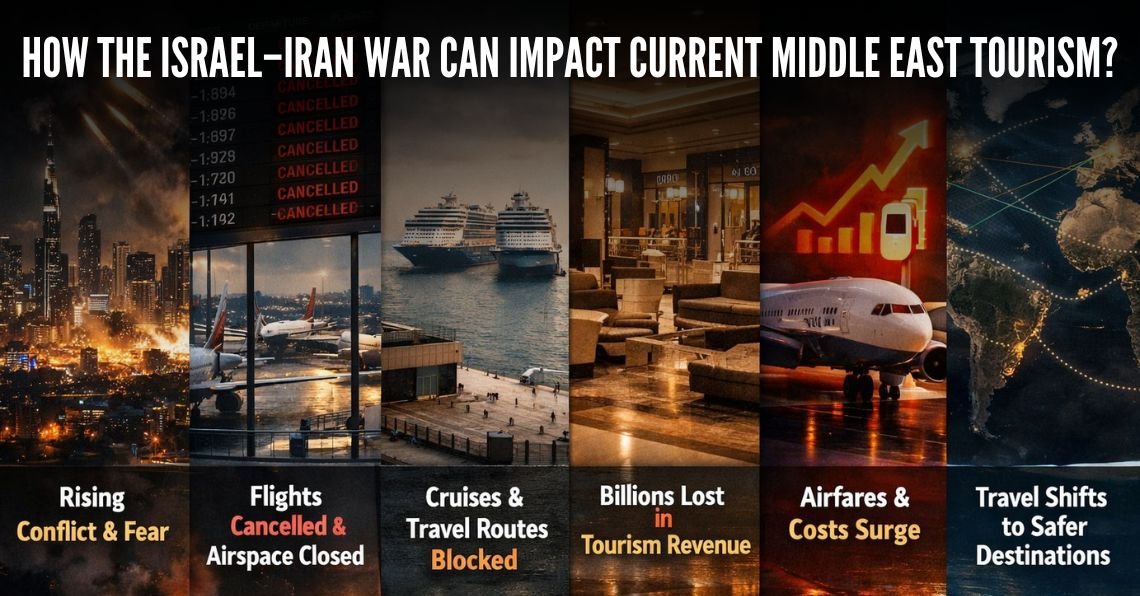
The Middle East has emerged as one of the fastest-growing tourism regions in the world over the past decade. Cities like Dubai, Abu Dhabi, Doha, and Riyadh invested billions in tourism infrastructure, luxury hospitality, and global events to attract international travelers. In 2025 alone, the region welcomed nearly 100 million international tourists, accounting for about 7% of global tourism.
However, the recent escalation of tensions and military conflict between Israel and Iran has created significant uncertainty for the global travel and tourism industry. Wars and geopolitical conflicts directly affect traveller confidence, aviation networks, and tourism economies. This blog explores how the ongoing Israel–Iran war could influence Middle East tourism and what it means for travellers and tourism professionals.
1. Declining Tourist Confidence and Safety Concerns
Tourism is highly sensitive to perceptions of safety. When a region experiences military conflict, international traveller’s often postpone or cancel their trips due to security concerns.
The Israel–Iran conflict has already triggered global travel advisories and increased warnings from governments. As a result, tourists and tour operators are becoming cautious about planning trips to the region.
Experts estimate that international tourist arrivals to the Middle East could decline between 11% and 27% in 2026, potentially resulting in 23 to 38 million fewer visitors.
This drop in confidence can impact popular destinations such as:
Dubai and Abu Dhabi (UAE)
Doha (Qatar)
Riyadh (Saudi Arabia)
Tel Aviv and Jerusalem (Israel)
2. Major Disruptions in Aviation and Air Travel
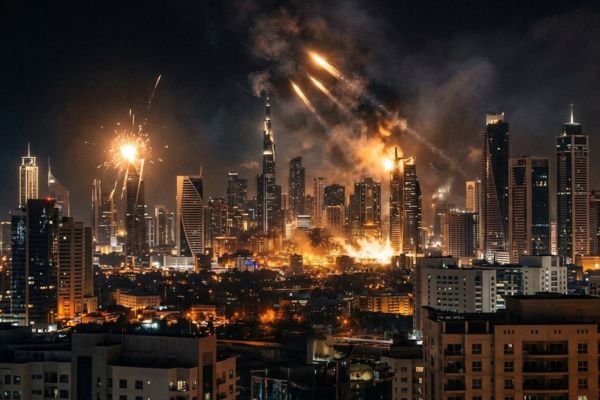
The Middle East is one of the world’s most important aviation hubs, connecting Europe, Asia, and Africa. However, war conditions have forced airlines to cancel or reroute flights due to safety risks and airspace closures.
Many airlines have temporarily suspended routes to cities across the region, while thousands of flights have been cancelled.
Airspace disruptions and missile threats have also forced countries to implement emergency flight corridors and limit operations at major airports.
These disruptions can cause:
Flight delays and cancellations
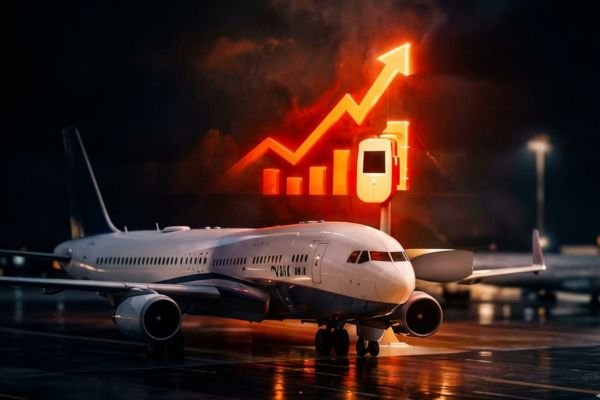
Higher air ticket prices
Reduced tourism traffic
Longer travel routes between continents
3. Economic Losses in the Tourism Sector
Tourism contributes billions of dollars annually to the Middle East economy. The conflict could lead to major financial losses for hotels, airlines, tour operators, and tourism authorities.
The regional tourism industry is valued at around $367 billion annually, and experts warn that the conflict could cause $34–$56 billion in losses if the situation continues.
Luxury hotels, resorts, cruise operators, and travel companies may experience declining bookings, especially during peak tourism seasons.
4. Impact on Tourism Investments and Mega Projects
Countries like Saudi Arabia and the UAE have been investing heavily in tourism projects such as:
Saudi Arabia’s Vision 2030 tourism initiatives
Dubai’s global tourism expansion plans
New cultural and heritage attractions across the Gulf
However, conflicts can damage the region’s reputation as a safe travel destination, which may discourage foreign investors and international tourists. Analysts warn that the war could undermine years of investment aimed at diversifying Gulf economies away from oil dependence.
5. Shift of Tourists to Alternative Destinations
When travelers avoid conflict zones, tourism demand usually shifts to safer destinations.
Many travelers who originally planned Middle East trips are now choosing alternative locations such as:
Greece
Portugal
Turkey
Southeast Asian destinations
Tour operators worldwide are adjusting itineraries and offering alternative travel packages to accommodate changing traveler preferences.
6. Long-Term Impact and Recovery Potential
Although wars cause temporary setbacks, the tourism industry in the Middle East has shown resilience in the past. Historically, tourism in the region has recovered after geopolitical crises once stability returns.
However, recovery typically requires:
Restoring traveler confidence
Stable air travel routes
Improved security conditions
Strong international marketing campaigns
Tourism experts believe that once peace and stability return, the region can gradually regain tourist interest due to its rich culture, heritage, luxury tourism, and global connectivity.
Conclusion
The Israel–Iran conflict has the potential to significantly disrupt tourism in the Middle East by affecting traveller confidence, aviation networks, tourism investments, and regional economies. While the situation is still evolving, the immediate impact includes flight disruptions, travel cancellations, and economic losses for the tourism sector.
For students and professionals in the travel and tourism industry, understanding how geopolitical events influence tourism is crucial. The industry is closely connected to global politics, economic stability, and international relations.
At Ties Institute, we believe that learning about such global developments helps future tourism professionals build stronger, more resilient careers in the travel industry.